Me and my sister visited one of two of our main local nature reserves today. Armed with a jar, I.D book and net, we started our search on a grassy hillside near the entrance and into the reserve working our way through two joining fields and into the woodland. Patches were in dappled shade, perfect for Speckled woods. Bushes, believed to be budlia also attracted a font of Peacock butterflies. Total species noted...
4x Speckled wood
3x Male Common blue
1x Female Common blue (brown in colouration)
6x Gatekeepers
5x Green-veigned white
4x Small white
3x Large white (one i.d'ed as a male, a further two seen in flight)
5x Peacock
3x Meadow brown
3x Commas
Also noted:
2x Southern hawkers (species: Aeshna cyanea) also patroled the woodland.
The final and best butterfly to mention was an absolute beauty. Instantly recognised as a Fritillarie we were itching to I.D it. Easily one of the largest butterflies I have ever seen it flew fast and evaded the net for the first few times and eventually we lost it over the trees. On finding it a second time later on our wanders the gloves were off and within one swift, decisive swoop of the net it was captured to the sounds of triumph but that was not the end of it. Whether it was divine fate or just plain bad luck but as we looked through the glass we found the prize was not the only thing we had captured. A fly had also found its way into the jar. What was the chances. How on earth could we even have consided it happening. There was no way the butterfly would tolerate a fly and stay still long enough to I.D it so we were left with an unexpected challenge, how do we remove the fly but keep the prize.... It didn't happen...it got away...and just to annoy us further the fly was still in the jar. Needless to say we left the fly with a suitable headache for our inconveinence before we let it go.
Tuesday, 20 July 2010

Saturday, 17 July 2010
Wildlife with a little sun, sand and sea on dorsets coastline
 Taken at: 1/100th sec, f 5.6, 105mm, ISO250, Shutter Priority
(hand held)
 Taken at 1/1000th sec, f 5.6, 105mm, ISO250, Shutter Priority
 Taken at 1/1000th sec, f 5.6, 105mm, ISO250, Shutter Priority
(hand held)
 Taken at: 1/1000th sec, f 6.3, 105mm, ISO250, Shutter Priority
 Taken at: 1/1000th sec, f 6.3, 105mm, ISO250, Shutter Priority
(hand held)
 Taken at: 1/640th sec, f 7.1, 18mm, ISO250, Shutter Priority
 Taken at: 1/640th sec, f 7.1, 18mm, ISO250, Shutter Priority
(hand held)
 Taken at: 1/1000th sec, f 5.6, 360mm, ISO 400, Manual
 Taken at: 1/1000th sec, f 6.3, 105mm, ISO 250, Shutter Priority
 Taken at: 1/1000th sec, f 5.6, 360mm, ISO 400, Manual
(hand held)
 Taken at: 1/500th sec, f 5.6, 240mm, ISO 400, Manual setting,
  Taken at: 1/500th sec, f 5.6, 270mm, ISO 400, Manual,
compensation -2/3 (hand held)
 Taken at: 1/500th sec, f 5.6, 240mm, ISO 400, Manual setting,
 compensation -2/3 (hand held)
 Taken at: 1/500th sec, f 5.6, 270mm, ISO 400, Manual,
compensation -2/3 (hand held)
The strong sunlight has given all three of these duckling pictures a harsh appearance in terms of lighting as they were taken around mid day and so there potential is reduced, something I forgot to think of at the time.
 Taken at: 1/1000th sec, f 6.3, 105mm, ISO 250, Shutter Priority
(hand held)
 Taken at: 1/1000th sec, f 5.6, 105mm, ISO250, Shutter Priority
(hand held)
 Taken at: 1/1000th sec, f 6.3, 105mm(cropped), ISO250, Shutter Priority
 Taken at: 1/1000th sec, f 5.6, 105mm, ISO250, Shutter Priority
(hand held)
 Taken at: 1/1000th sec, f 6.3, 105mm(cropped), ISO250, Shutter Priority
(hand held)
 Taken as above
 Taken at: 1/1250 sec, f 5.6, 400mm, ISO 200, Manual
 Taken as above
I have deliberately limited myself to using only the shorter 18-105mm lens when taking many of these images, leaving the 400mm at home, consequently, for those that may have noticed, many of the images are taken at 105mm this being the full extent of the lenses reach. The idea is if I deliberately limit myself to only the smaller lens then it should hopefully help me to concentrate on the framing and backgrounds more so than with a long lens as I dont have the option of zooming in to fill the frame. It's interesting to do. I have found that many of the images produced with the 105mm are sharper and more detailed in its results than the 400mm lens. This is probably because the smaller lens is of a better quality than the larger lens and this is interesting as it is the first time I have experienced a notable difference between two lenses (not having had that much experience yet of using the kinds of lenses pros take for granted). There is a multitude of other factors that affect sharpness but I am positive that the lenses are a factor here.
 Taken at: 1/1250 sec, f 5.6, 400mm, ISO 200, Manual
(tripod support) time: aprox 4:30pm
Saturday, 3 July 2010
Back catalogues...


(For anyone who hasn't read the article in the RSPB seasonal magazine). Back in 2001 80 Kittiwakes were shot and arranged to spell out the word "death". On the 14th of May 2009 at Marsden Cliffs, Tyne and Wear two guys were caught and jailed for shooting dead nine nesting Kittiwakes from the beach at night. It makes me angry to see this needless persecution especially when I consider their beauty that we all witness and that of which I have tried to capture in this photo. Five other incidences of this nature have also previously been recorded.
Sunday, 27 June 2010
Grey grit between stepping stones...

Going to Patterdale (a village at the bottom of Ullswater lake in the Lake District) this weekend was always going to be a bit hit and miss I thought to myself. Ullswater Steamers which run boat cruses on the lake had a photography competition on and so, doubtful as I was to go I thought I'd it a bash with the old idea that "nothing ventured, nothing gained" or perhaps "I might as well push myself, I have just as much chance of something good as bad" and so caught the bus down to in the hope that I might photograph some worthy entries. My reasons for being hesitant by the way was that this was a whole new ball game. I have never worked like this before, nothing was certain, but it was good practice. I had to think like a pro, learn to see an opportunity and work in the moment. I have to say I did miss a few.

This time the morning woke up groggily. I pulled myself out from under my tarp and surveyed the situation. Bellow the rocky outcrop I was on I could see the water enshrouded in a cold fog and the road running as a ribbon along the far shore. Everything was grey. The sky, the water, hills, trees, the lot. The light just seemed to flat line from daybreak, this morning really hated itself. But as I packed my things away and clambered back onto the path I saw the strangest sun I have ever seen. It burnt its way through the cloud cover like the red smoulder of a cigarette, a perfectly round near orange to blood red sun in the sea of grey sky. I tried to take a shot of it but no luck. The photograph above is where I started the morning.
Brothers water is a tiny lake thats waters flow into ullwater via connecting rivers. Its surrounded on one side by ancient oak woodland and is an absolutely stunning place for some wildlife watching. This was where I spent the Sunday.
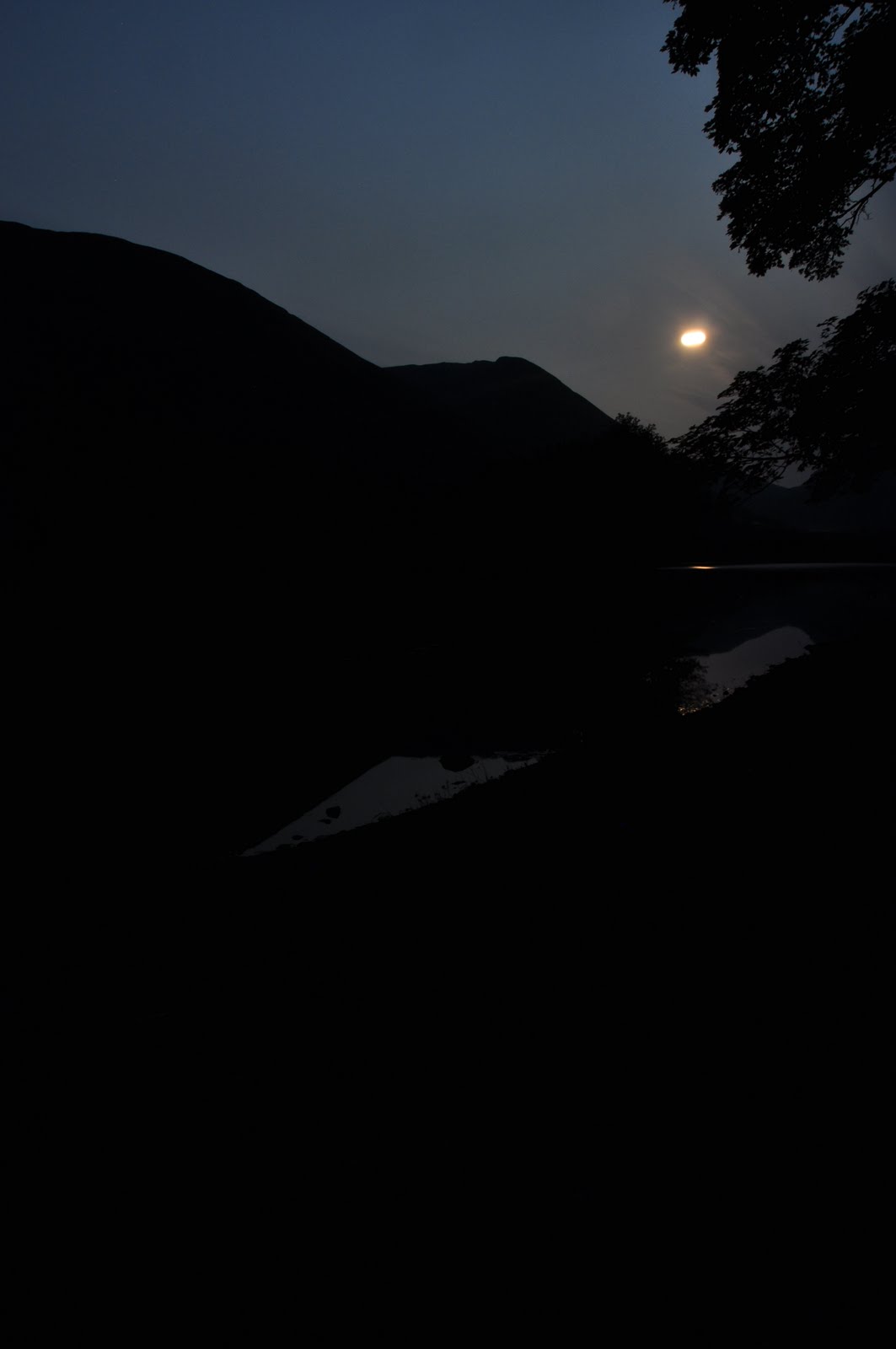
I couldn't sleep, a time check told me it was midnight. I thought about it and then decided enough was enough, time for a early start. Brothers water was eerily still as I entered hours before dawn. Sitting beside the shore near to where the lake narrowed to carry on it's flow as a river I paused to listen to the night and sort my gear out. Headlights in the distance could be seen occasionally as cars came over the hills, their beams illuminating the sky like search lights funnelling off into darkness before descending back onto the road. It was only me, the fish, some rowdy blokes in a house on the far side and their dogs awake at this hour in the morning. I could hear their voices travelling out over the lake and the beat of music pulsing just audible in the still air. Its amazing that even where silence reigns there will always be someone to ruin it. Splashes in the water in front of me as fish broke the surface to feed on midges and two tawnys called just behind me quite low down in one of the trees. Pasties for breakfast. I swear by them as they last well, don't need cooking, taste nice and are everything I need on a good trek.
As I was finishing breakfast the moon came out and I took this image. I had to hold the shutter down for five minutes to get this exposure and I timed it on my phone just to make sure. The midges were giving me hell. It was virtually impossible to stay still for five minutes with them around and so I did get camera shake in most of my images.
On the wildlife side of things highlights of the trip were 3 spotted fly catcher, nesting swifts, 2 mistle thrush and 2 female goosanders both with 7 chicks each so I think it was worth the visit.
As an additional, the things I missed my chance on was once at the crag pictured where the sun was low and four lads were standing looking out over the lake, another was sitting on the ground. They looked the part for a good winning people shot on the crag and it did cross my mind to ask if I could photograph them for the competition but I ended up letting a good chance slide as I weighed up asking them then decided against it. Another main one was a triathlon where a hundred or so people swam so far, ran so far and cycled the last leg. Why I never considered photographing this I don't know. The third and final thing I really should have been on the ball with was photographing a international motorbike group that was in the town. They more than anyone are the kind of people to show off for the camera. This one I never realised until I caught the bus back. Talk about things staring you in the face. Lesson learned.
Friday, 25 June 2010
C.P a fourth day cometh.
Todays favourite. Another juvenile, its that time of year. 

 This Great Tit was naturaly edgy at the bird table. I've found that it so often will grab what it could and then fly off to eat it from a tree branch which is where I had a much better chance of photographing it. One such tree was nicely positioned in front of the hide I happened to be photographing from.
 The clay coloured background is as a result of shallow water and a sunny day
 Chicks seek shade in the height of the day. I'm in two minds about this image. I like it but its not the kind of style I feel is my own. It has a different feel to it than all my other images if you know what I mean and so don't intend to follow this any further.


 This Great Tit was naturaly edgy at the bird table. I've found that it so often will grab what it could and then fly off to eat it from a tree branch which is where I had a much better chance of photographing it. One such tree was nicely positioned in front of the hide I happened to be photographing from.
 The clay coloured background is as a result of shallow water and a sunny day
 Chicks seek shade in the height of the day. I'm in two minds about this image. I like it but its not the kind of style I feel is my own. It has a different feel to it than all my other images if you know what I mean and so don't intend to follow this any further.
Wednesday, 23 June 2010
Leighton Moss

I entered Silverdale on a rickety old bus around about three 'O' clock. To get from Penrith to Silverdale only cost me £3.40 each way so I didn't mind. You could tell it was a local service as it was only a small hired bus and as usual on my travels, anywhere scenic involves a bus full of old people also enjoying a day out. Not a single geared up hiker or avid bird watcher in sight, how disappointing. The rolling stone hills of cumbria had changed to meadows and grass pasture by this time as I stepped off at the station and walked around the corner to Leighton Moss. At the entrance bird feeders had been setup and as you carry on into the reserve another had been setup behind a screen where Gray Squirrels (vermin) could often be seen. The reserve has seven hides of which I visited five. The other two were on a salt marsh on the outskirts of the reserve but it hadn't rained in months and was bone dry so no waders to improve my I.D skills on and so no photographs which was a shame. These two hides were also the only two that faced away from the rising sun facing map SE. Of all the hides I went to I found myself always going back to the Grizedale Hide. It was the best place to see deer, Little Egrets undoubtedly had a nest towards the back and all the usuals Lapwing, Pochard, Tufted Duck, Black Headed Gull, Shell Duck, Reed Bunting, Oystercatcher, Shoveler, Moorhen and Coot (Leighton moss is Coot city) would pretty much tend to be there. Also sighted one Great Crested Grebe, one Heron and one cormorant (not from that hide) over the course of my visit. The Marsh Harrier is however always going to be the highlight of every visitors day. I saw it four times during my stay most of which were of it disappearing but even seeing it briefly, it dominated the reserve and there was no mistaking it.
It was four 'O' clock the next day as I headed down into the reserve. Though it was getting light the sun had yet to surface over the horizon and the morning was crisp and clear. Mist collected over the pools and as I went deeper into the reserve in the hope of seeing a Barn Owl from one of the hides it began tinting orange in the light. I stopped at a small wooden bridge where a still channel of water separated the reeds. (see top image) Silhouettes of warblers and tits darted over the water and into the reeds as I set up the tripod and experimented with the framing. I stayed there taking shots as the sun came up and time ticked by. I think I'll have to get up for mornings like this more often.
The hide was empty as I entered. The door ran smooth, effortlessly quiet. I saw deer both mornings but they were never quite close enough except for when in the shaddow of the reeds where the low suns light could never quite get to. Part of the reason why the moss was so quiet was because the boombs of the Bittern hadn't been heard in weeks. I overheard someone saying how he has come to Leighton Moss for 17 years and counting and always heard it so the chances are it has most likely died. I spent most of my visit at the reserve and heard nothing either, the sad truth is he may be right.
The last hide I went to known as Lower Hide was the furthest situated hide into the reserve. The path to it is long but your guaranteed to see or hear something interesting before you get there. The sun was hot as I trekked the thin path with the tripod on my shoulder and my bins around my neck. A sign stated frogs and toads crossing. They weren't joking. I counted 50 but there must have been in excess of 100 frogs along this one thin path which makes sense really. Its a hot day in summer and I'm surrounded by water. But still, there were so many you'd think they were spiders. It was so difficult to know where to put your feet. I could already see casualties that lay before me, the tiny splattered remains of their former selves. Once in the hide it yielded nothing much, most what was interesting stayed to the back just in sight.
The RSPB were very helpful as they showed me where I might be able to see Peregrine, the best place to find the harrier and I also investigated the Lancashire coast as they recommended and saw a 30+ flock of Oystercatchers. Leighton moss is good and I will definitely go back however I have seen the Somerset Levels which makes Leighton Moss look like a pond. All told a good few days. Thanks to anyone who has read even half of this ramble. Hopefully it might give some people some good info.
Monday, 21 June 2010
Pure gold
I was walking along the public footpath to photograph Red Squirrels at Center Parcs when I abruptly stopped still. A Goldcrest was feeding on an outstretched branch at eye level just in front of me. It was so close. They are such tiny little birds with their dark green appearance and bright crest. I watched it taking insects from the pine needles and then it did what Goldcrest do but what would surprise the casual onlooker. Jumping off the branch it hovered like a hummingbird and began picking insects off the very tips of the branches with such grace and precision, whist still right in front of me. It rested briefly before returning to feed gradually moving closer towards me as it worked its way along the ends of the pines branches. Resting once more and as it stopped to look at me for one last time before disappearing I admired the colours of its crest and took in the detail. Best view yet.
Monday was the same day I took the Bull Finch image. As the day wore on and the sun broke through an overcast cloudy morning I sat there and watched the world go by. By now squirrel activity had slowed down to nothing much as it always does. Now being around mid day. Generally speaking any activity after 10am or before 6pm is pushing it if you're a squirrel. The calls were the first thing to get my attention. Using the cameras viewfinder as the lazy mans answer to binoculars I looked through the lens just to take a look and photographed what I saw. Interestingly enough there was a count of only one adult Bull Finch all day. It was busily going back and forth constantly between the feeder and a high branch of the nearest tree trying to satisfy its hungry young. Two young Great Tits also clambered in the branches of the same tree.
Monday was the same day I took the Bull Finch image. As the day wore on and the sun broke through an overcast cloudy morning I sat there and watched the world go by. By now squirrel activity had slowed down to nothing much as it always does. Now being around mid day. Generally speaking any activity after 10am or before 6pm is pushing it if you're a squirrel. The calls were the first thing to get my attention. Using the cameras viewfinder as the lazy mans answer to binoculars I looked through the lens just to take a look and photographed what I saw. Interestingly enough there was a count of only one adult Bull Finch all day. It was busily going back and forth constantly between the feeder and a high branch of the nearest tree trying to satisfy its hungry young. Two young Great Tits also clambered in the branches of the same tree.
Subscribe to:
Posts (Atom)